Spray Jones
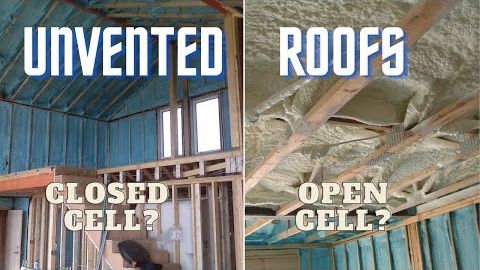
Unvented roofs - Closed cell vs Open cell Spray Foam Insulation which is better?
Spray foam on the underside of the roof deck, and how closed cell handles moisture, rot and leak detection compared to open cell.

Insulation questions
The questions we hear most, answered with what we see on jobs and what the research says. Every fact links to where it came from.
Answers
They are two different materials that happen to come out of the same kind of gun. Here is how they compare, according to the U.S. Department of Energy's Building America guide on spray foam [1].
| Open cell | Closed cell | |
|---|---|---|
| R-value per inch | About R-3.6 | About R-6 |
| Density | About 0.5 lb per cubic foot, soft | About 2 lb per cubic foot, rigid |
| Water vapor | Lets vapor through (5 to 10 perms at 5 inches) | A vapor retarder (under 1 perm at 2 inches) |
| Liquid water | Absorbs and holds it, up to one third of its volume | Hydrophobic, will not absorb water |
| Strength | Adds little | Substantially increases racking strength of walls |
| Sound | Absorbs sound well [7] | Reflects more sound [7] |
| Cost | Lower installed cost | Higher installed cost |
For most jobs around here, closed cell is the one we recommend: rim joists, crawl space and basement walls, pole barns and metal buildings, and the underside of a roof deck. It insulates, seals air and stops vapor in one layer, and it does not soak up water. For foam sprayed on sloped roof rafters, the DOE guide rates closed cell Preferred
in all climates, and open cell only Acceptable
in cold climates, with vapor retarders [1].
Open cell has two real advantages: it costs less, and it is better at soaking up sound. That makes it a fit for interior walls and floors between rooms, where noise matters and water does not. If it goes against a roof or an outside wall in our climate, the DOE guide says interior air sealing and a vapor retarder are critical
[1].
This is the question we get more than any other. The idea is that water runs through open cell, so you will see the stain on the ceiling and know where the roof is leaking.
Here is the problem. Open cell soaks water up. The DOE guide says open cell foam will also absorb and hold liquid water,
and the amount can be significant; up to one-third by volume
[1]. A slow leak can soak into the foam and spread out before anything shows, and a wet patch of foam does not point you to the hole.
Closed cell is hydrophobic and will not absorb water
[1]. It bonds to the underside of the roof deck and keeps the water where it came in. In our experience, a leak over closed cell usually means replacing a sheet or two of roof decking around the leak, not the whole roof.
Stop with the stupid comments about open cell being better under a roof deck than closed cell because if there is a leak the leak either dries faster or you can see it sooner. Not true. There is no compelling evidence one way or the other.
Joseph Lstiburek, Ph.D., P.E., Building Science Corporation, who has worked on spray foam under roof decks since the early 1980s [2]
His bigger point is the one we agree with most: roofs leak, no matter what insulation is under them. Keep the roof in good shape and fix leaks when they happen. Pick the insulation for how it performs the other 364 days of the year.
A thin coat of closed cell foam goes on first (the flash) to seal the air leaks and handle moisture. Then fiberglass or rock wool batts fill the rest of the cavity (the batt). You get most of the air sealing of spray foam for less money than filling the whole cavity with foam. The DOE guide lists flash and batt as one of the hybrid ways to use spray foam [1].
The one thing that matters: the foam layer has to be thick enough for the climate, so the inside face of the foam stays warm enough that the wall does not sweat. The DOE guide says the same of closed cell on roofs: it must be thick enough to prevent dewpoint condensation on its interior surface
[1]. Matt Risinger and Spray Jones both have good videos on flash and batt below.
Closed cell does. In 1992 the plastics industry had the NAHB Research Center, the research arm of the National Association of Home Builders (today Home Innovation Research Labs), test spray polyurethane foam in wood frame wall panels. Compared with panels without foam or sheathing, the foam filled panels resisted 300% more racking force with T1-11 wood siding and 200% more with vinyl siding [3]. The industry paid for that test, so here is the government's version: the DOE guide says the racking strength of frame walls is substantially increased when ccSPF is used in the frame cavities,
and that roof structure and wind resistance are enhanced with closed cell on the roof deck [1].
That is one more reason we like closed cell in pole barns, shops and metal buildings that catch the wind.
FEMA rates building materials by how well they survive a flood. In its Technical Bulletin 2, closed cell plastic foams and sprayed polyurethane foam are Class 5, highly resistant to floodwater damage.
Fiberglass and mineral wool are Class 3. Cellulose and open cell foams are Class 2. Only Class 4 and Class 5 materials are acceptable below the flood elevation in a flood zone [4].
If your crawl space or basement ever takes on water, closed cell is the insulation that comes through it.
Ohio sits in climate zones 4 and 5, and ENERGY STAR gives the same attic recommendation for both: if your attic is uninsulated, add R-60. If you already have 3 to 4 inches, add R-49 [5]. A lot of older homes around here have about 4 inches. We measure what is there before we price anything.
Yes. When the insulation in an attic is matted, dirty, wet or packed down, or a crawl space has batts lying in the dirt and torn plastic, we pull it out and haul it away before anything new goes in. Topping up bad insulation just buries the problem. We also do removal by itself when that is all you need. Here is an attic we cleared down to the ceiling.
Both work, and we install both. The difference is how much depth it takes. Settled, per inch [6]:
| Loose fill | R-value per inch | Settled density |
|---|---|---|
| Cellulose | R-3.2 to R-3.8 | 1.5 to 2.0 lb per cubic foot |
| Rock wool | R-3.0 to R-3.3 | 1.7 lb per cubic foot |
| Fiberglass | R-2.2 to R-2.7 | 0.5 to 1.0 lb per cubic foot |
So fiberglass needs more inches to reach the same R-value, and it weighs far less doing it. We will tell you which one we would put in your attic and why. We also install fiberglass and rock wool batts in open walls, floors and crawl spaces.
Videos worth watching
We did not make these. They come from Spray Jones, a spray foam pro who runs the ThinkSprayFoam community, and Matt Risinger, builder and host of the Build Show, plus one from Home Innovation Research Labs, the former NAHB Research Center. Credit where it is due.
Spray foam on the underside of the roof deck, and how closed cell handles moisture, rot and leak detection compared to open cell.
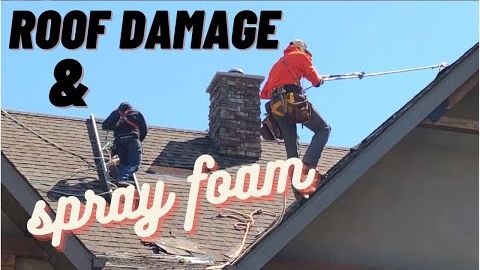
His follow-up on roof decks, water and spray foam.

Vaulted and low-slope ceilings, concrete foundations, under slabs and crawl spaces, and old building retrofits.
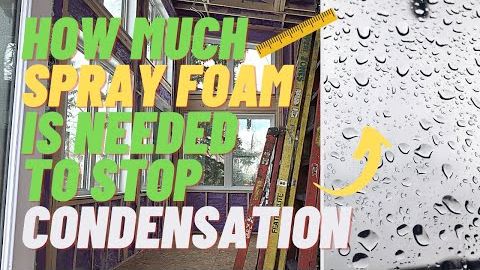
The thickness question behind pole barns, metal buildings and flash and batt.
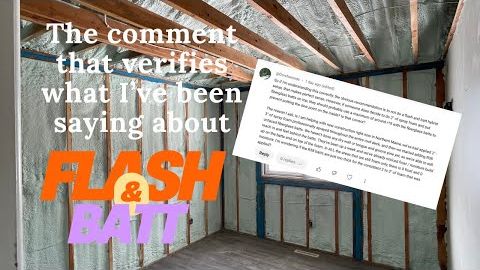
His take on flash and batt.
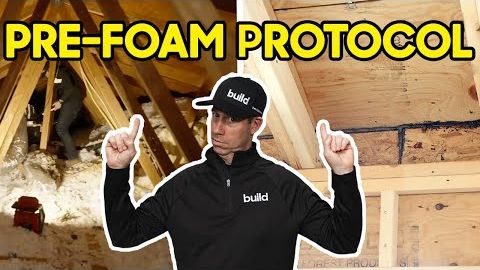
R-values, moisture control, air sealing and cost, open cell against closed cell.
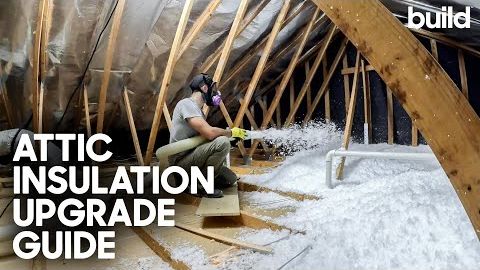
Re-insulating an attic the right way, with the air sealing at lights, ducts and the attic hatch called out.
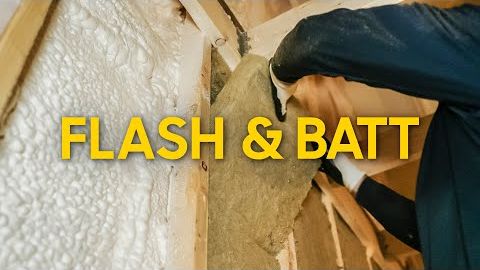
Flash and batt start to finish: closed cell foam, then rock wool.
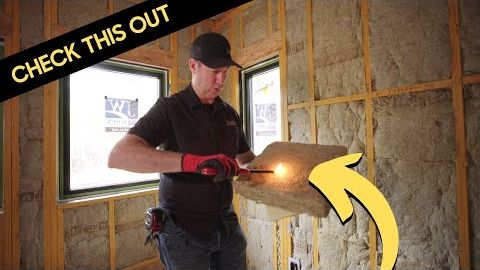
Easy install, no off-gassing, vapor open, fire resistant, sound, remodel friendly and water resistant.
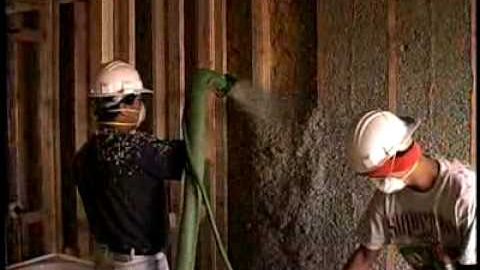
Cellulose blown into open stud cavities, from the former NAHB Research Center.
Have a question that is not here? Call or text 740-590-5352, or tell us about the job.
Get a price
Text a photo of your attic hatch or crawl space, or call. We come out, measure, and price it in writing before any work starts.